Challenge
After working side-by-side together for years, Adam and I wanted to share our thoughts and experiences around how to achieve great product design from the inside out. Our challenge was corralling our sprawling ideas and distilling them down into an organized, concise, and approachable presentation.
Solution
The presentation we produced was the result of months of deep conversations, tons of GitHub issues, countless cups of coffee (or beers, depending on the time of day), and lots of iteration. We organized our thoughts into three principles, added some audience interaction, and a bit of humor.
Ice Breaker!
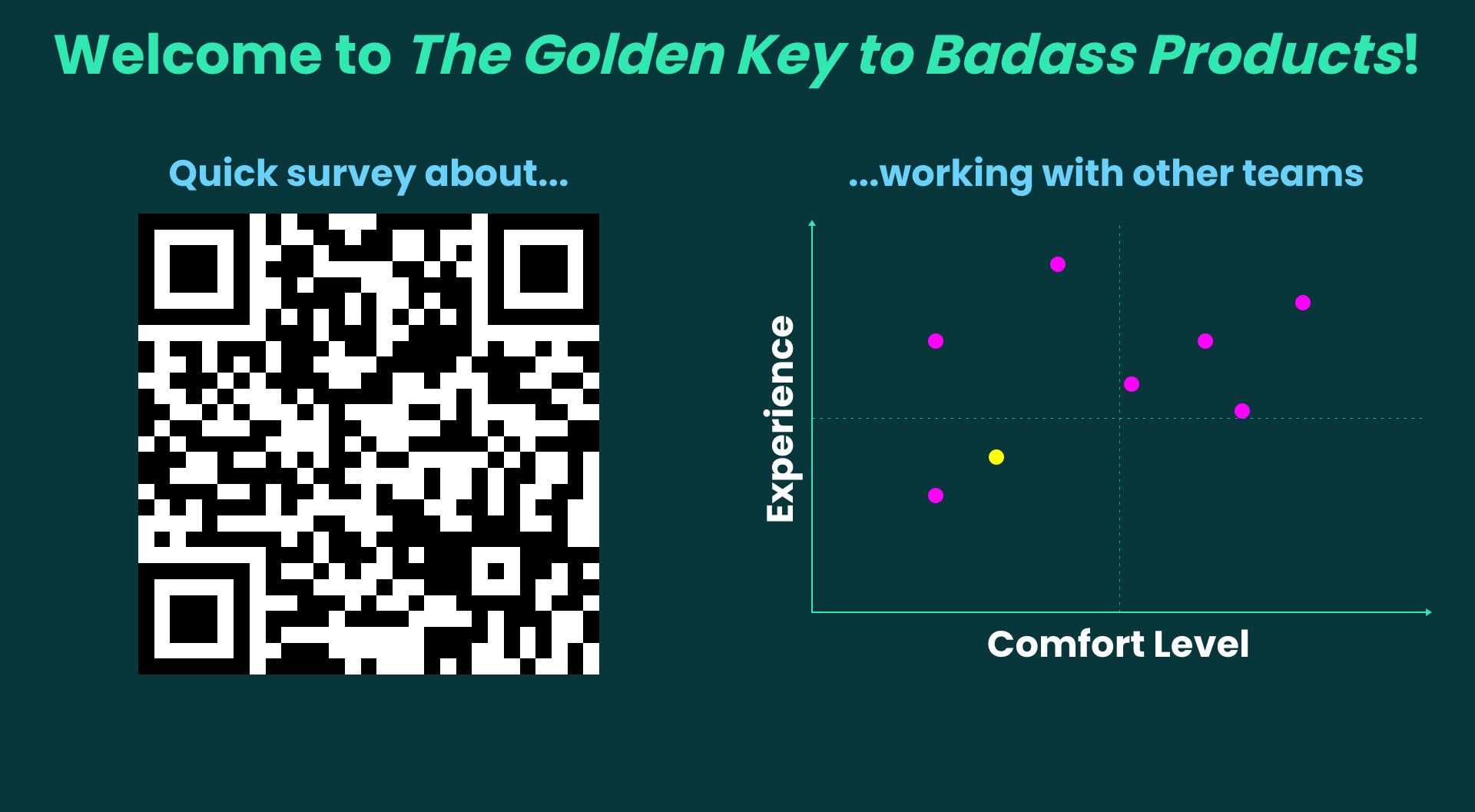
Hoping to get a sense of who our audience was, we offered an anonymous poll. On a screen with a giant QR code and an x/y axis chart to the right, people could scan the code and choose if they were a designer, developer, or other.
With respectively colored roles, they could each plot their experience and comfort level working with complementary teams (in other words, designers working with developers, or vice versa).
As more and more people scanned the code, the chart became busy with differently colored dots moving around. About two thirds of the audience were developers, one third were designers, and a few “others” were sprinkled in.
Most people moved their dots into the upper right quadrant of our chart: more experience and higher comfort levels working with complementary teams, which was great to see!
The Golden Key to Badass Products
The best architecture in the world will never solve for bad user experience. To build a truly powerful, dynamic, and efficient platform, the key is to align technical architecture with design architecture.
Here are some ways to make this alignment happen, approaches that work, and organizational wins that these practices can achieve.
Although the talk title says golden “key,” as our content started to come together, we began to think about this as a keychain: principles that build on each other, more powerful together than individually.
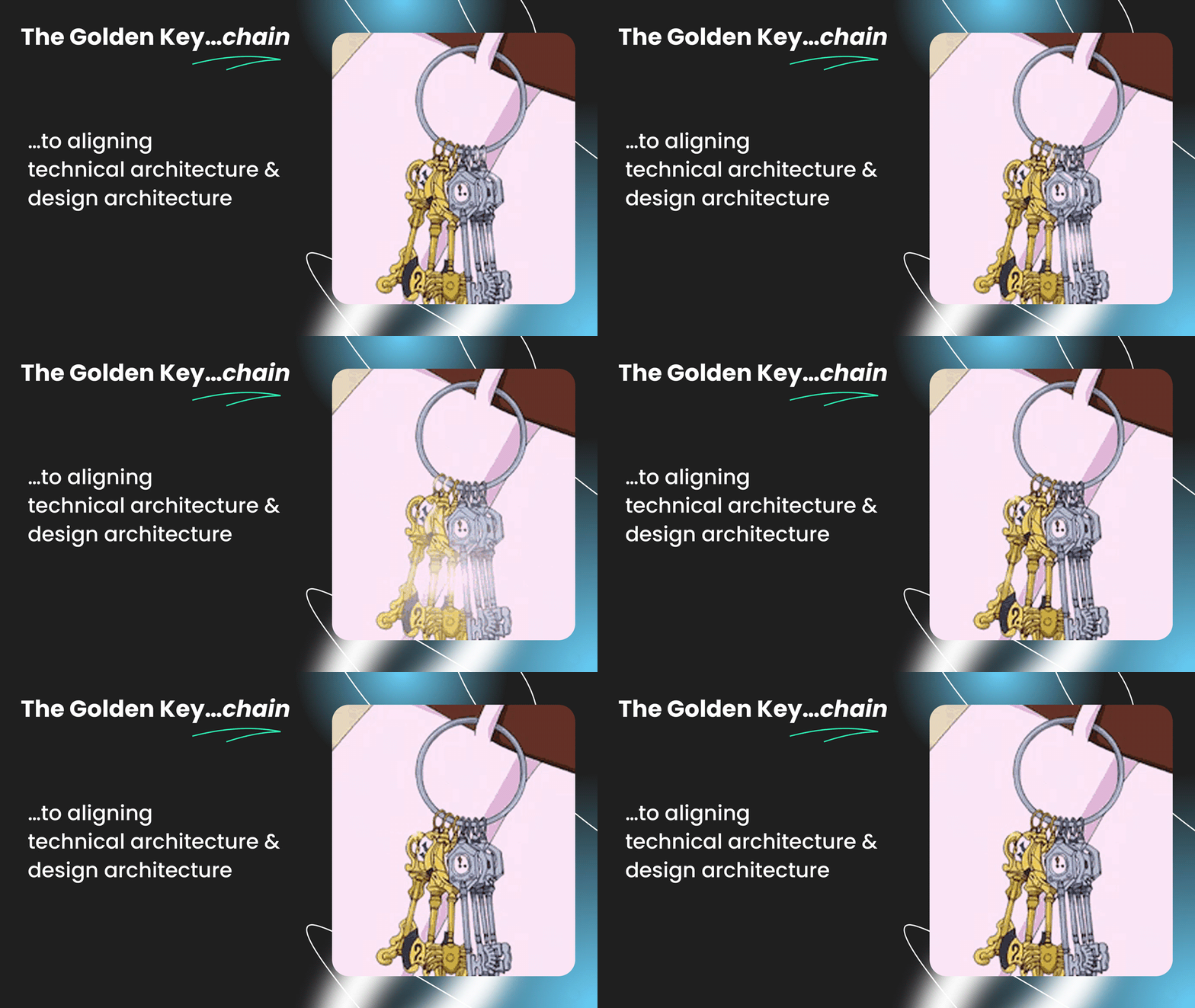
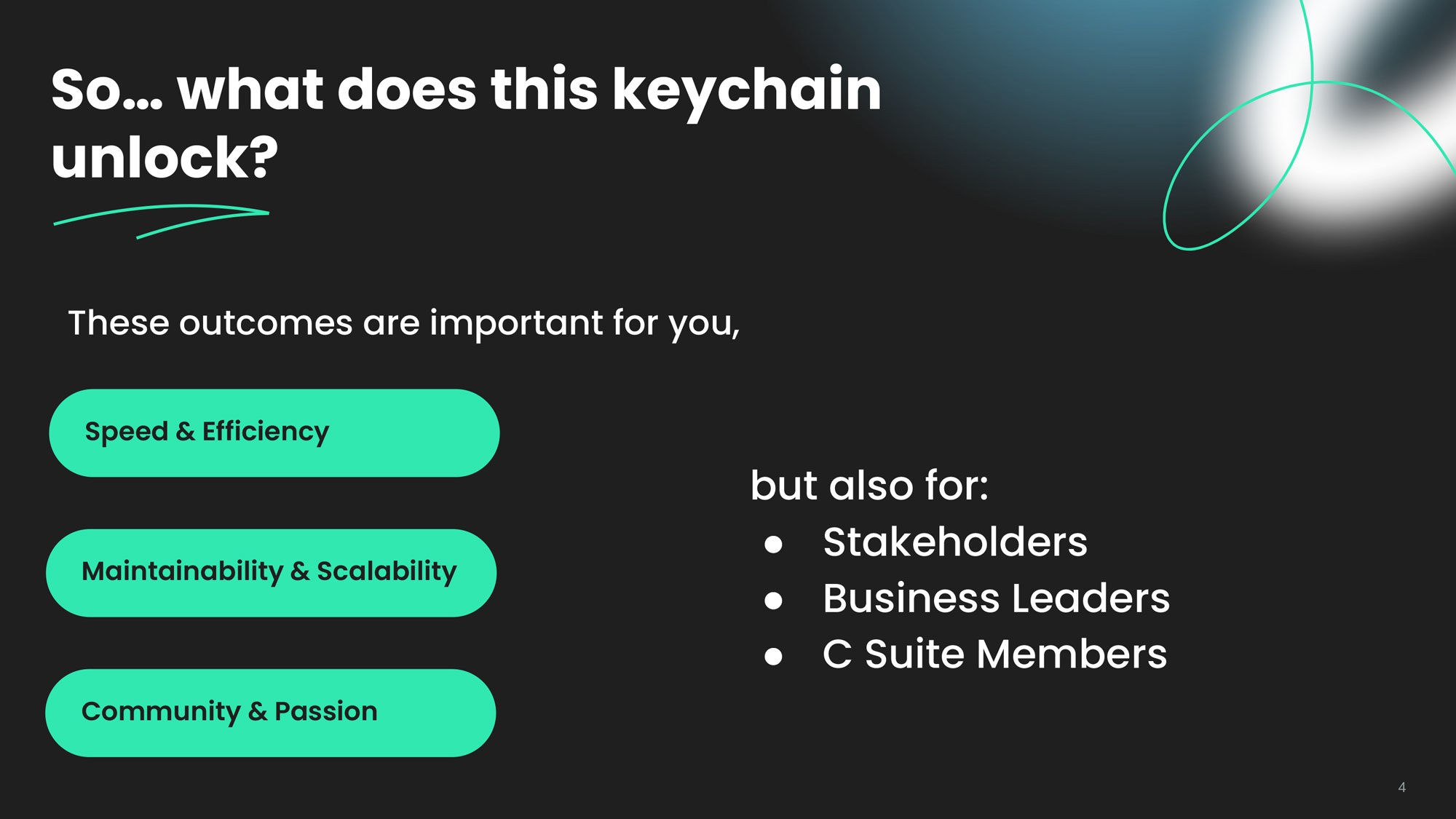
With the keychain of all the keys, you can unlock comprehensive outcomes that will round out how you work and build communities. This is important to you, and even more important to your business leaders.
At the end of the day, when they realize the outcome, you will have gained their buy-in, and more importantly, their trust.
Remember, don’t sell them these keys; sell them what they unlock.
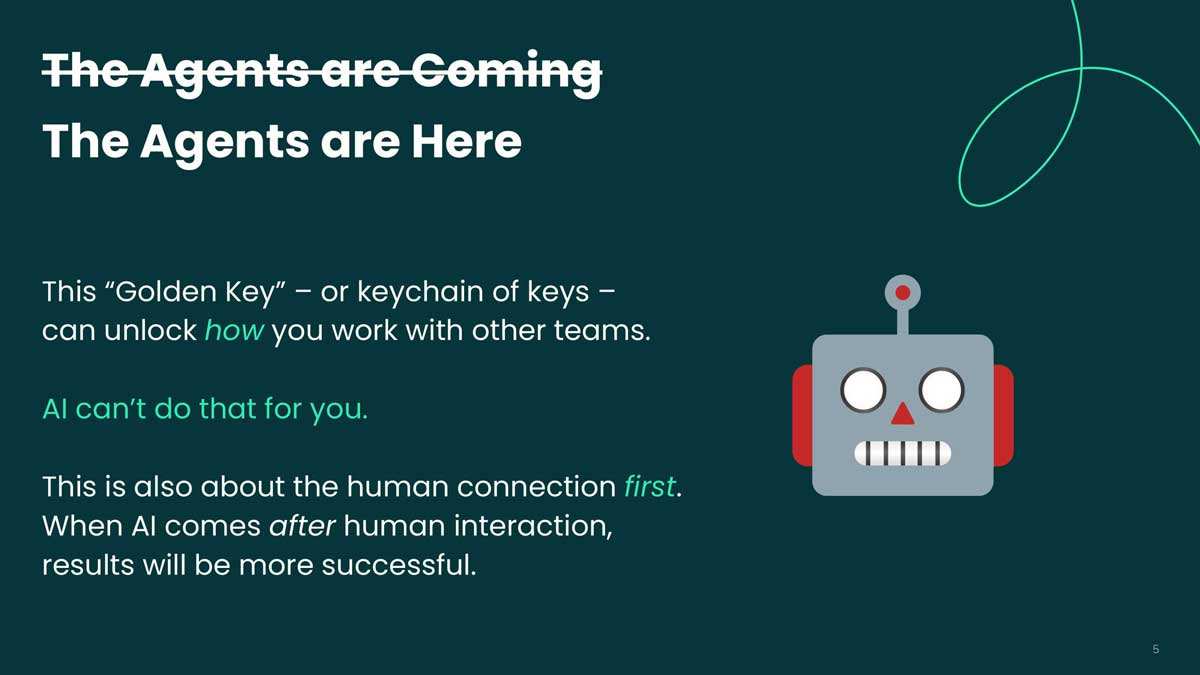
The Obligatory AI Slide
The following keys are about establishing connections with humans and how you work with people to make things better. When you create a shared human connection first, you will be able to use any tool—including AI—better, together.
Key #1: Mindset
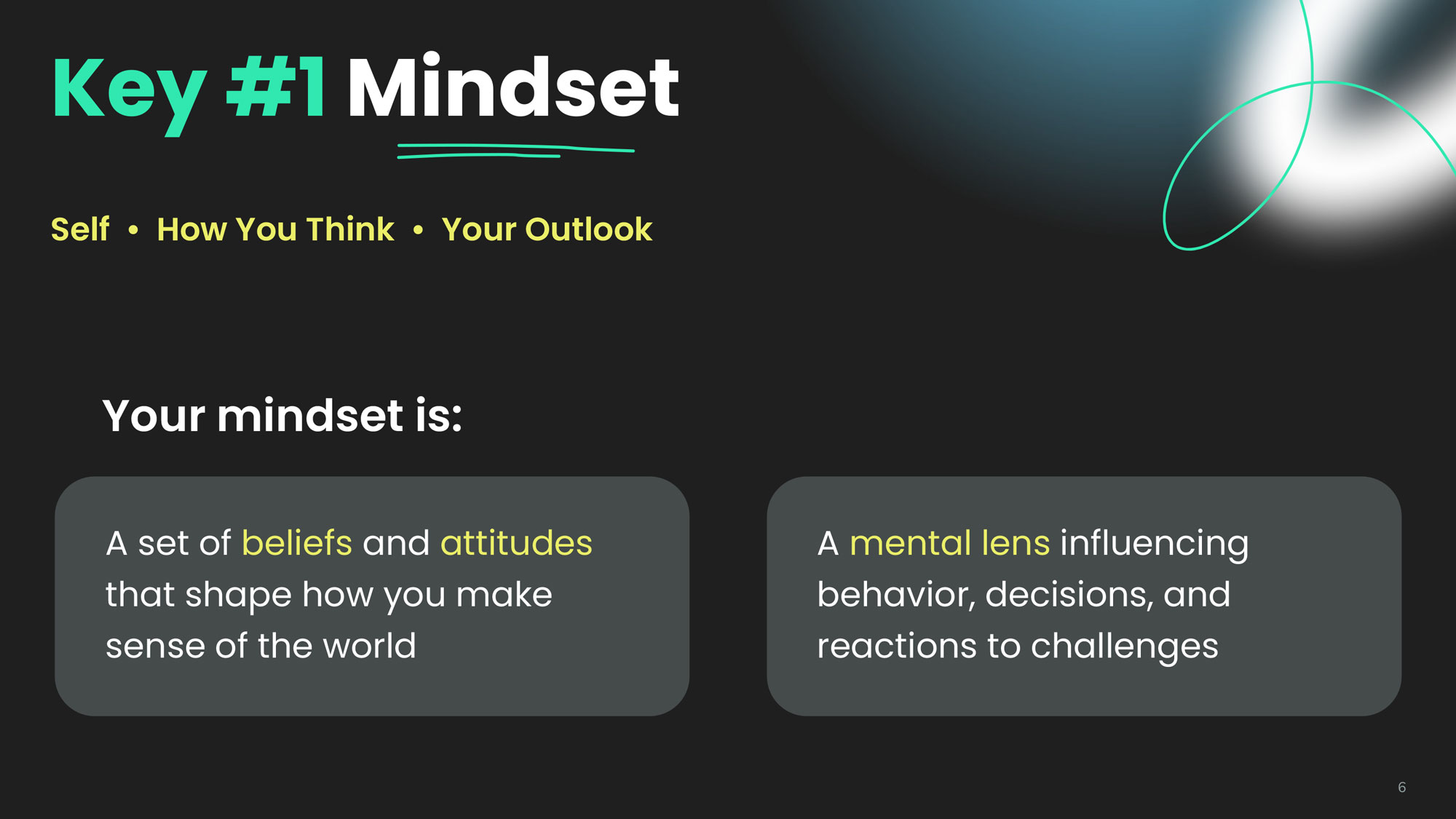
Not to be too Ted Talk-y, but we believe the first and most important of the keys is mindset. Your mindset is your perception, or mental lens, of the world.
While mindset is foundational and sets the tone for the following keys, it is also the most accessible because it is something that every individual can control. This one is up to you, and you alone. (It’s also free!)
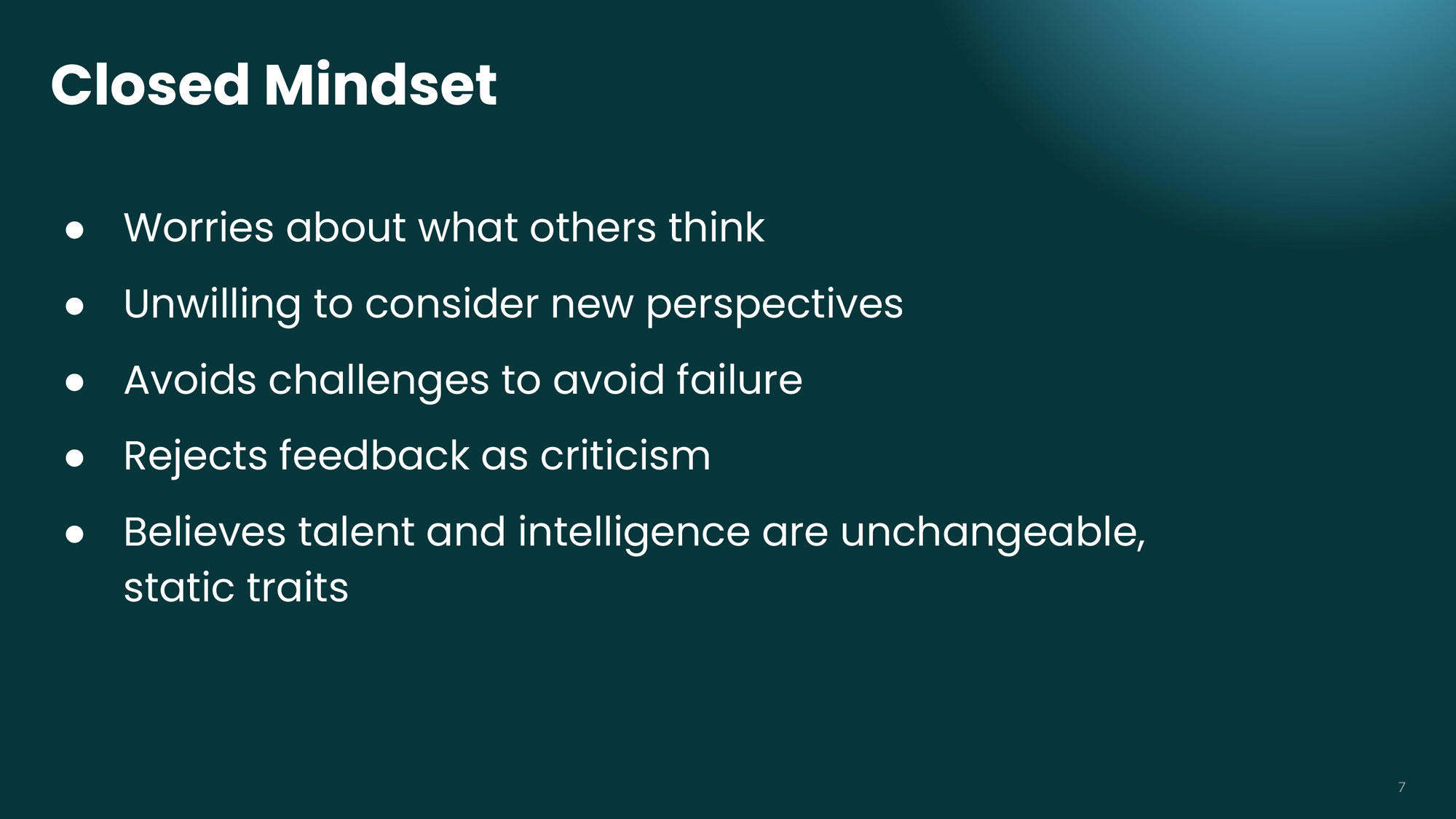
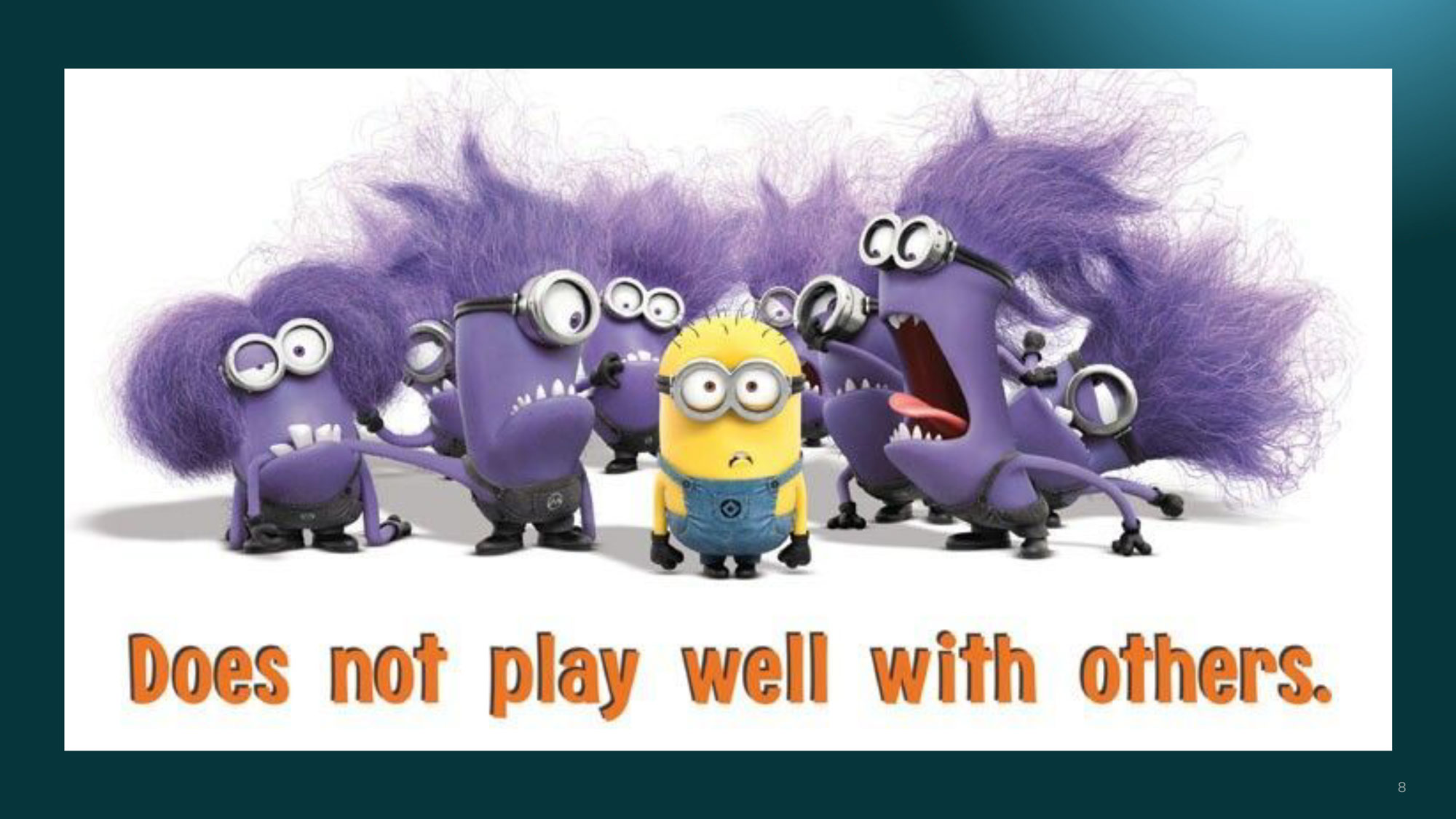
While there are many types of mindsets, having a closed mindset cripples the ability to learn and grow. Approaching work with a closed mindset keeps interactions transactional and superficial.
A light-hearted and unscientific take on working with people with closed mindsets...
Open Mindset
On the opposite end of the spectrum, we have the “Badass.” An open mindset sets you up to always be learning from others, embrace challenges as opportunities, and be curious about the unknown instead of avoiding it.
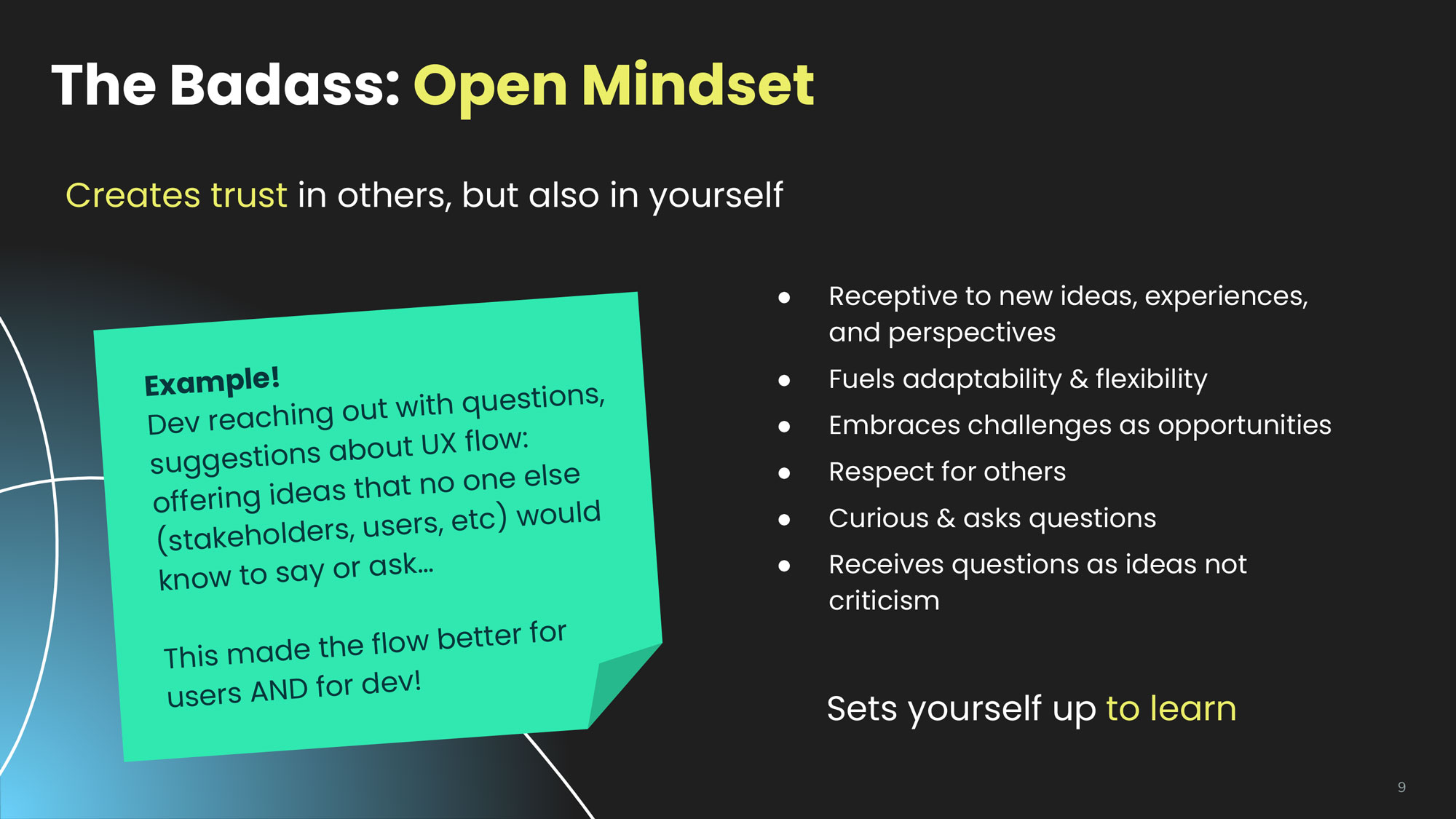
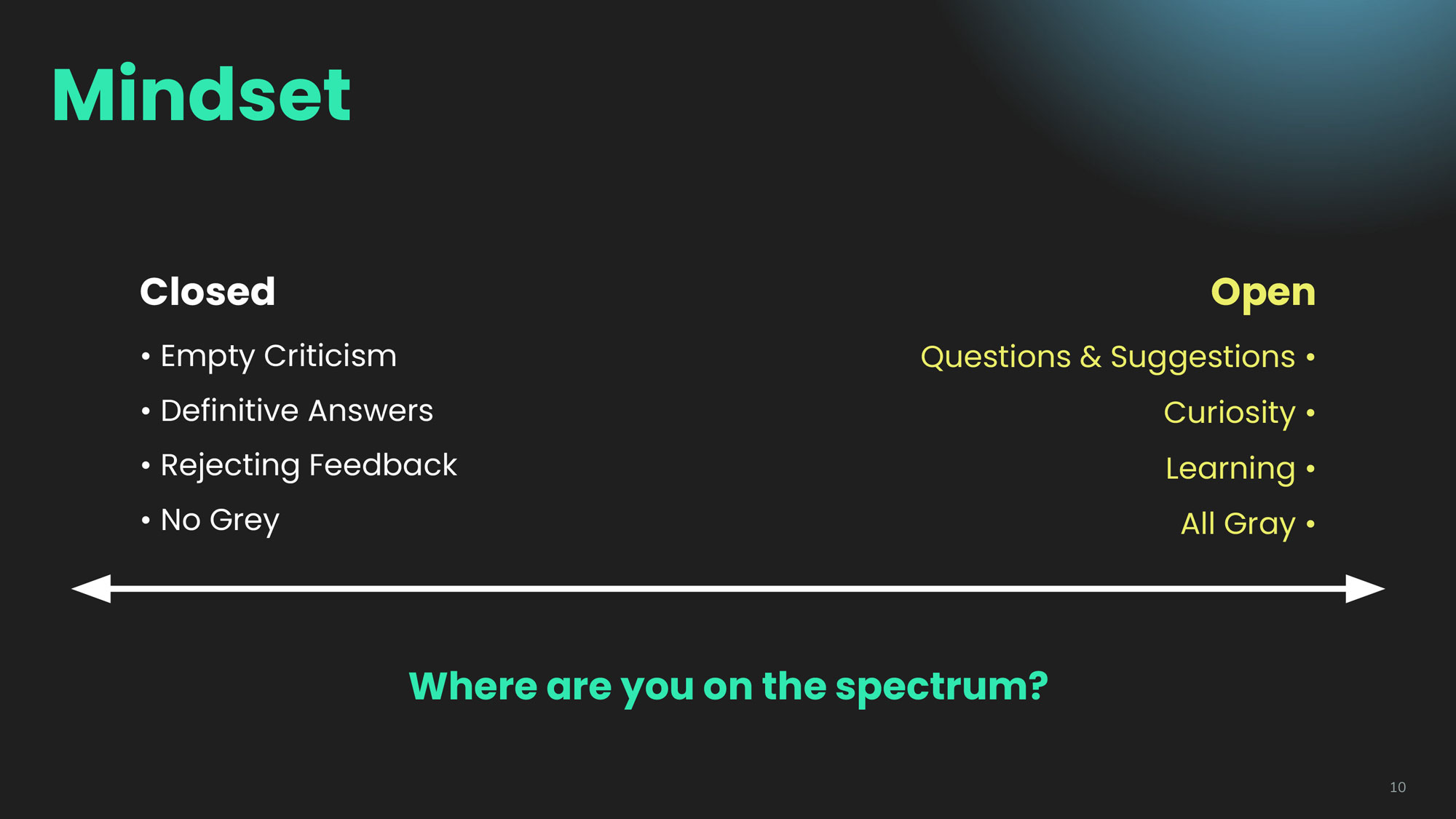
Wherever you might be on the spectrum of Bad and Badass, there is no wrong answer. Where do you find yourself most of the time? Are there opportunities to move further to the right on this spectrum? Things change monthly, weekly, and daily, and that’s okay.
Key #2: Workflow
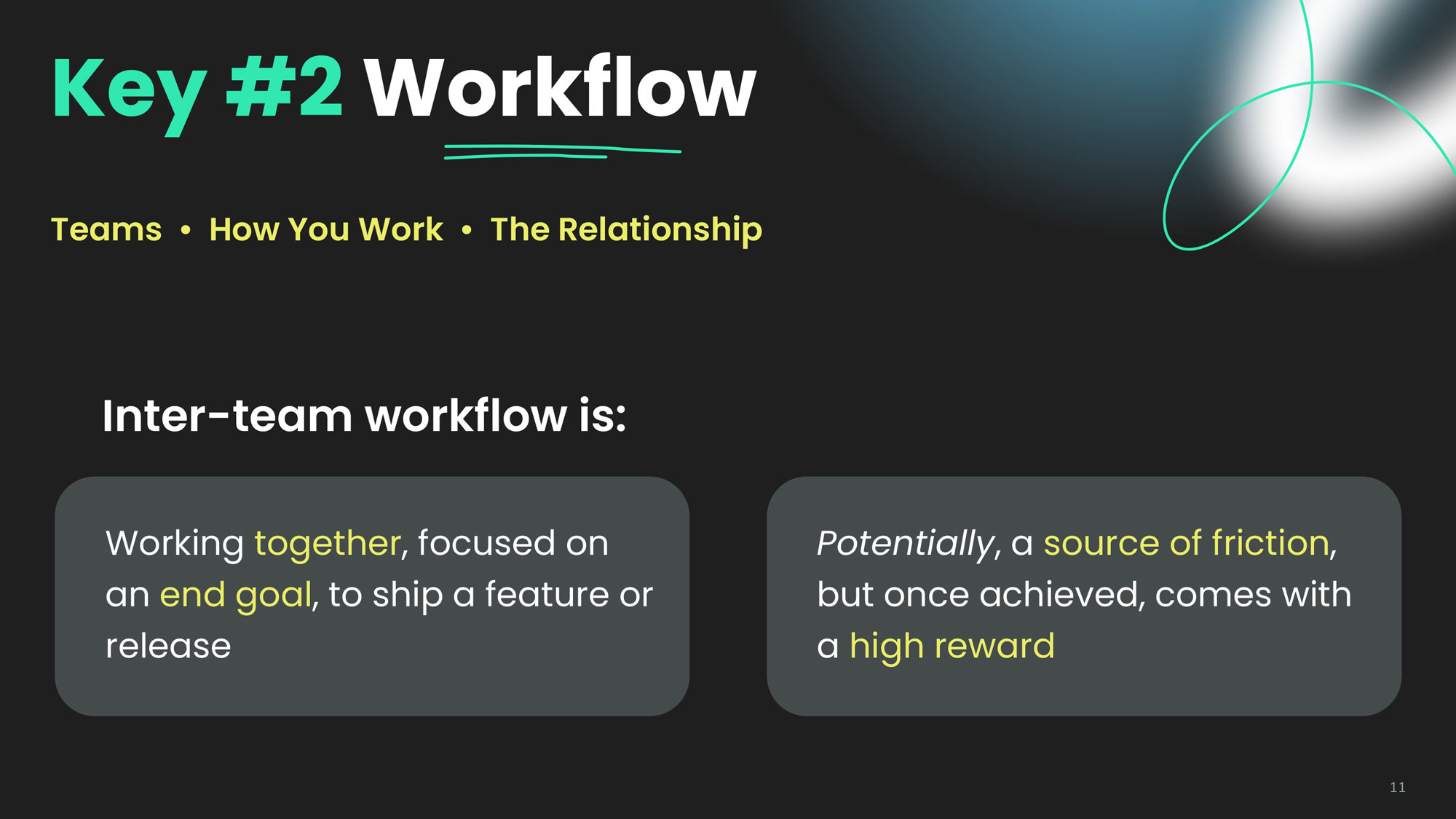
This concept takes our first key, which focuses on self, and expands it to focus on others and on how you work with other teams. In our experience, this can be the hardest key to get right.
Cross-team communication can be a source of friction, and sometimes, human nature and business structures often push us to utilize lower-friction options.
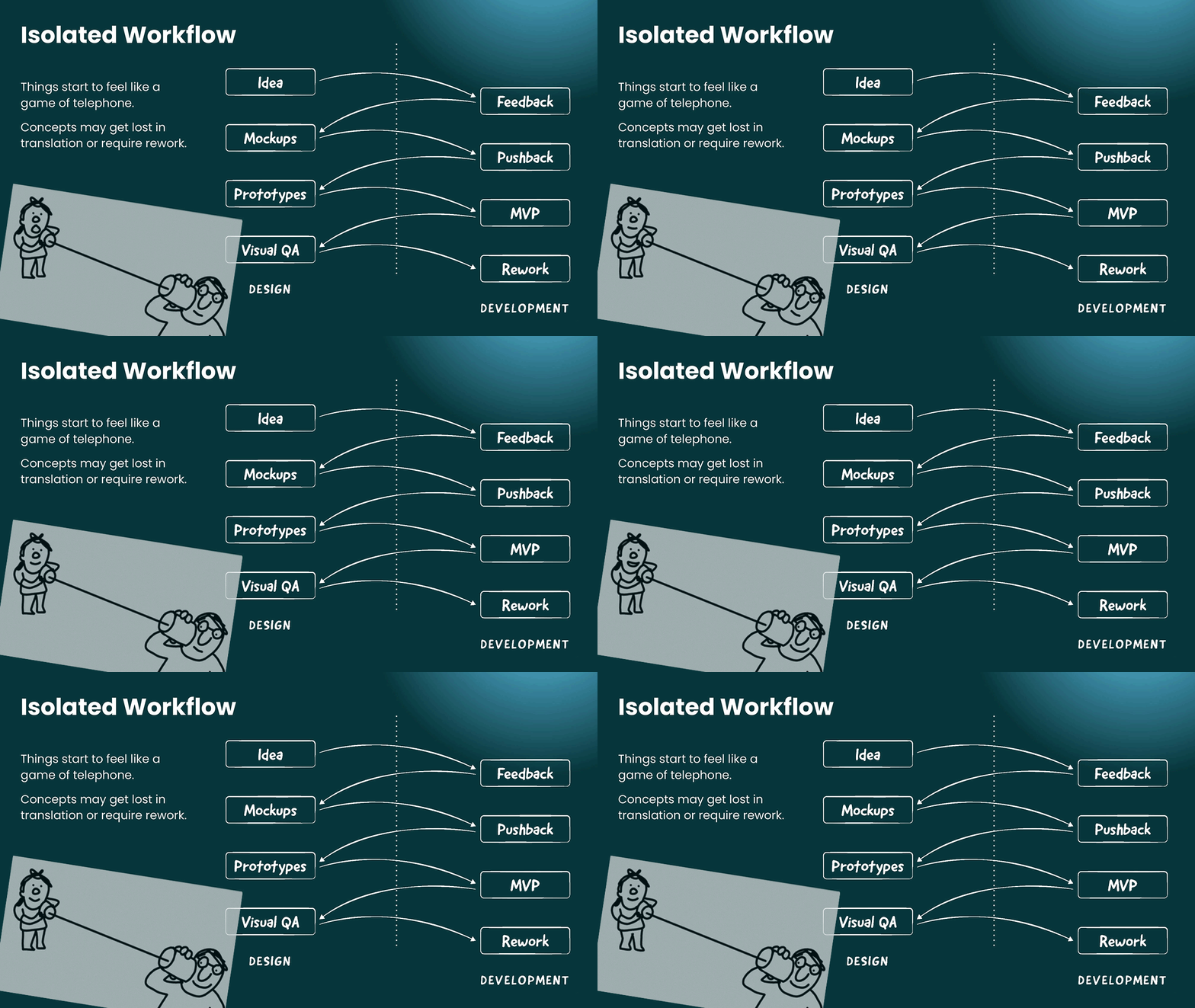
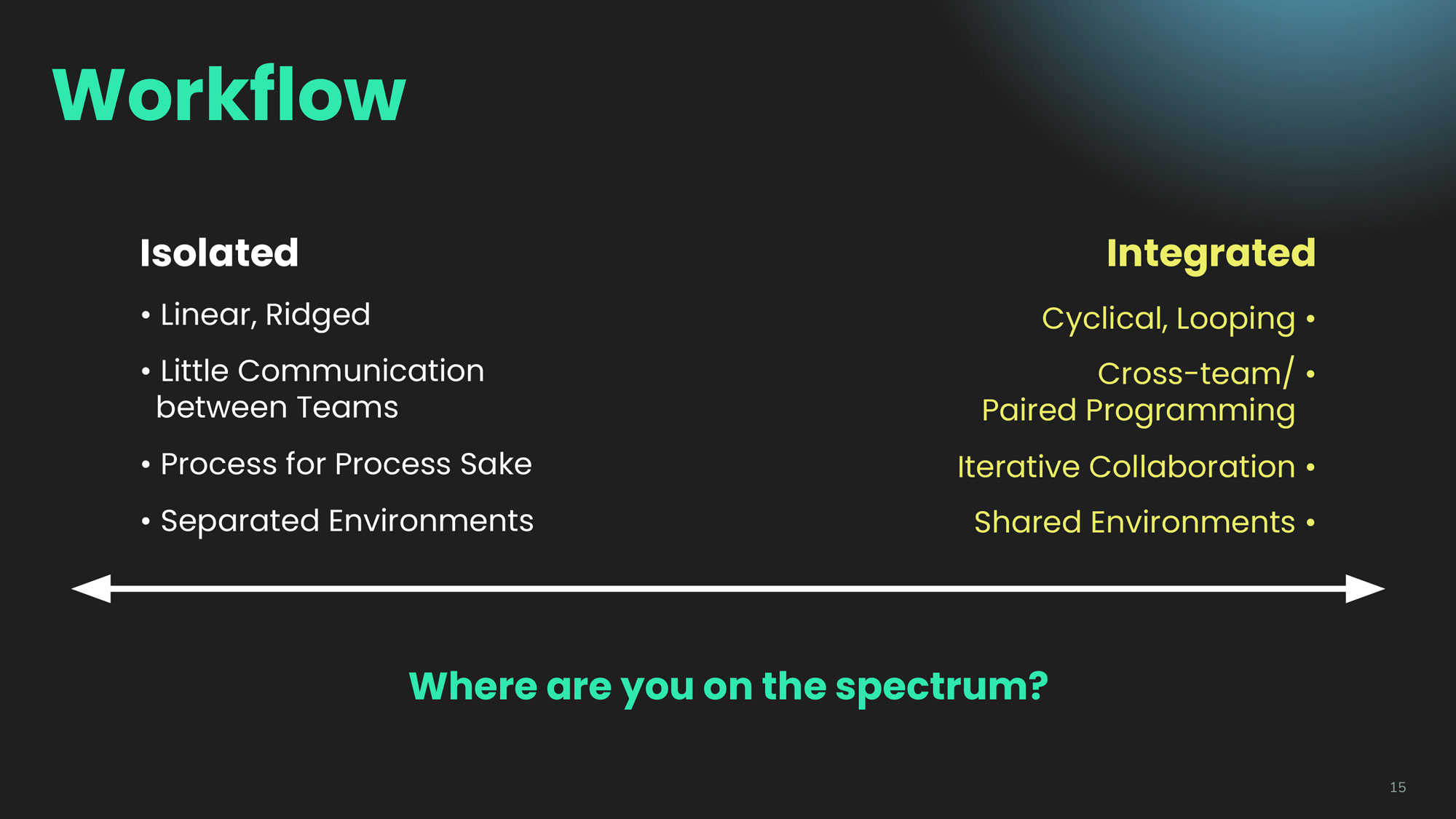
On one end of the spectrum is an isolated workflow. Design and development are on separate journeys, have separate goals, and separate measures of success. Work is volleyed without interaction over a cube wall, and things start to feel like a game of telephone.
With isolation comes the loss of context and intention, and results in slower iterations where no one is learning or improving.
Maybe the other side has started to feel like “The Dark Side.” Designers may get stereotyped as being pixel-perfect and inflexible, and developers as dismissive and siloed. But it doesn’t have to be this way!
Integrated Workflow
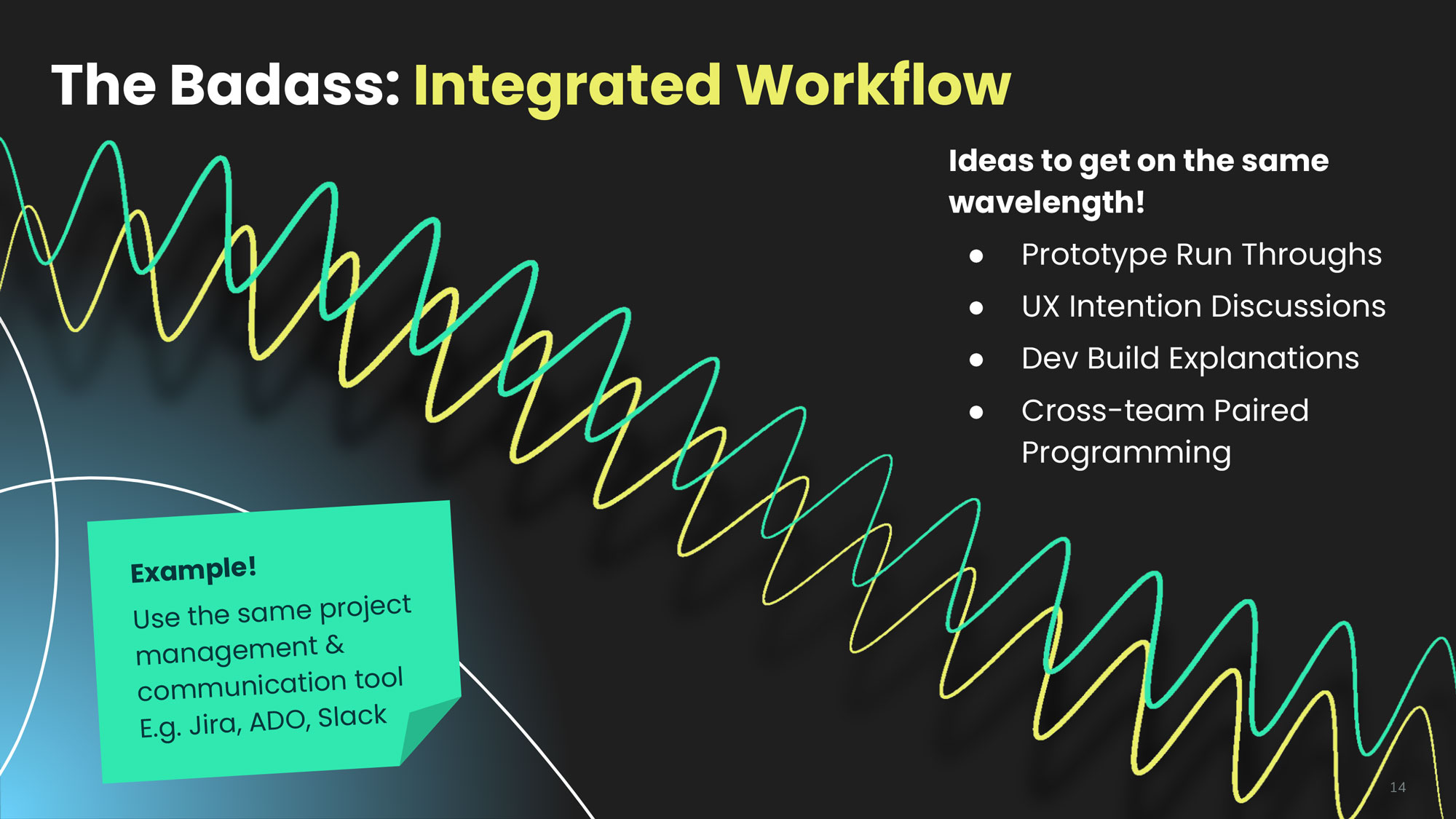
On the other end of the spectrum, an integrated workflow brings separate teams together. Prototype demonstrations, build explanations, and shared tools will all help get teams on the same wavelength.
When complementary teams come to the table with an open mindset, they can remain independent, learn from each other, and share stronger connections.
Again, this is a scale for reflecting. Where do you see your relationship with other teams? Are there opportunities to strengthen workflow?
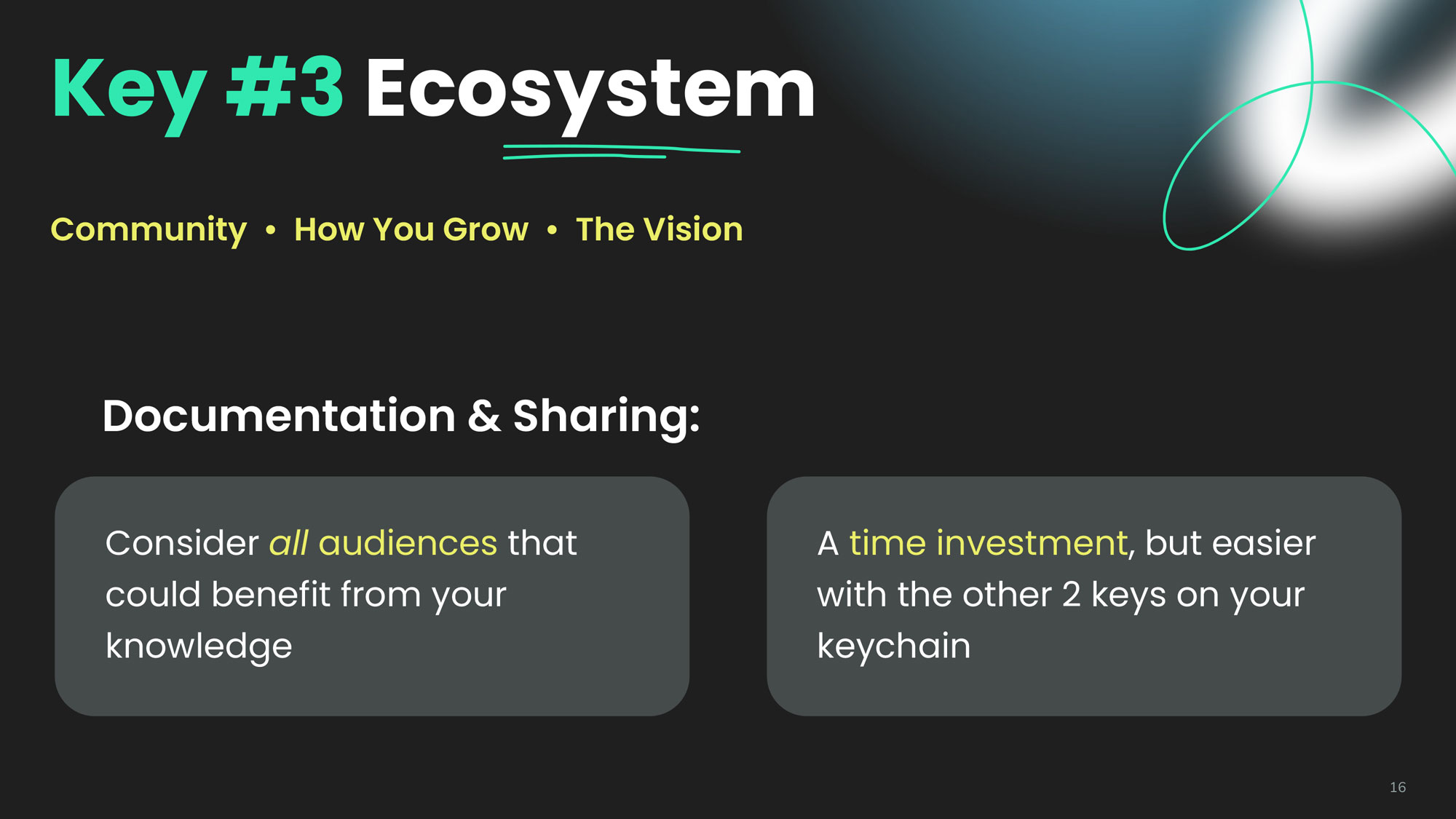
Key #3: Ecosystem
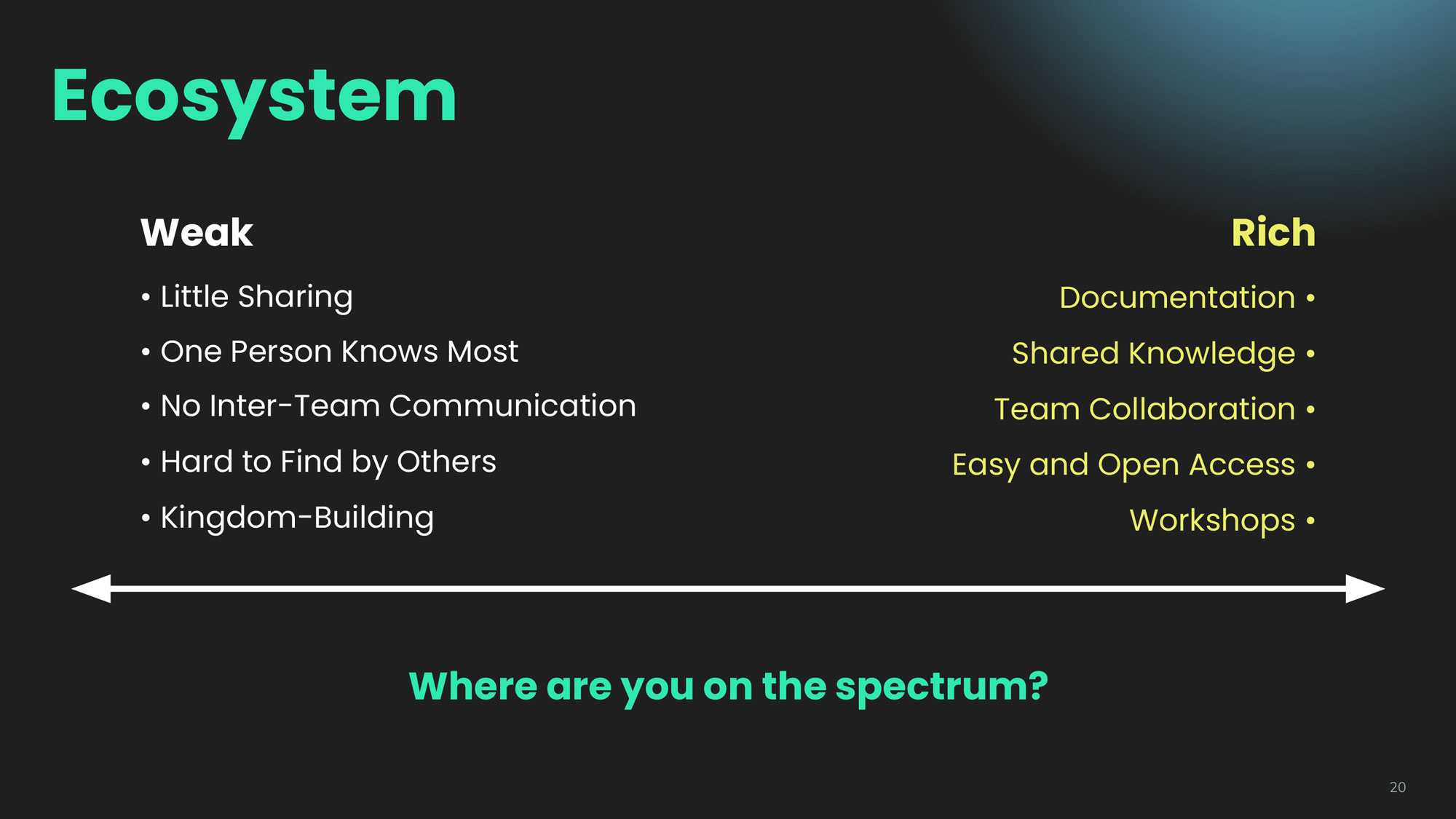
This is where we take our open mindset and integrated workflow and share it with our friends! This key is possible because of other keys and will allow for long-term growth.
By building an ecosystem, we are constantly learning from others and practicing an open mind, as well as better aligning teams through more transparent work and workflows.
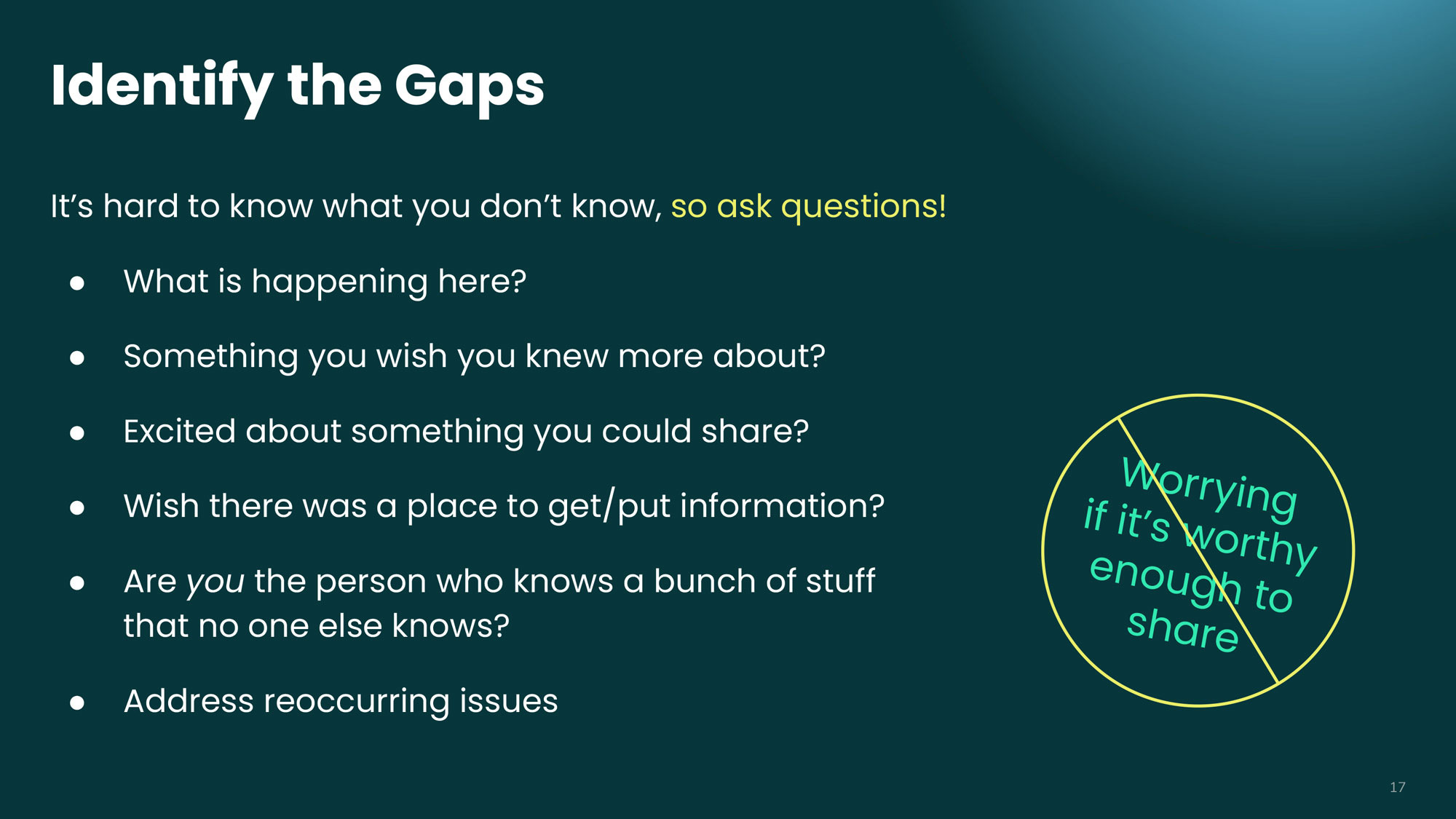
When you begin to build your ecosystem, identifying the gaps can give you a natural starting point. Ask questions like “Are you excited about something?” or “Is there something you wish you knew more about?”
Wherever you start, don’t worry about whether something is worthy enough to share (that goes against Key #1!).
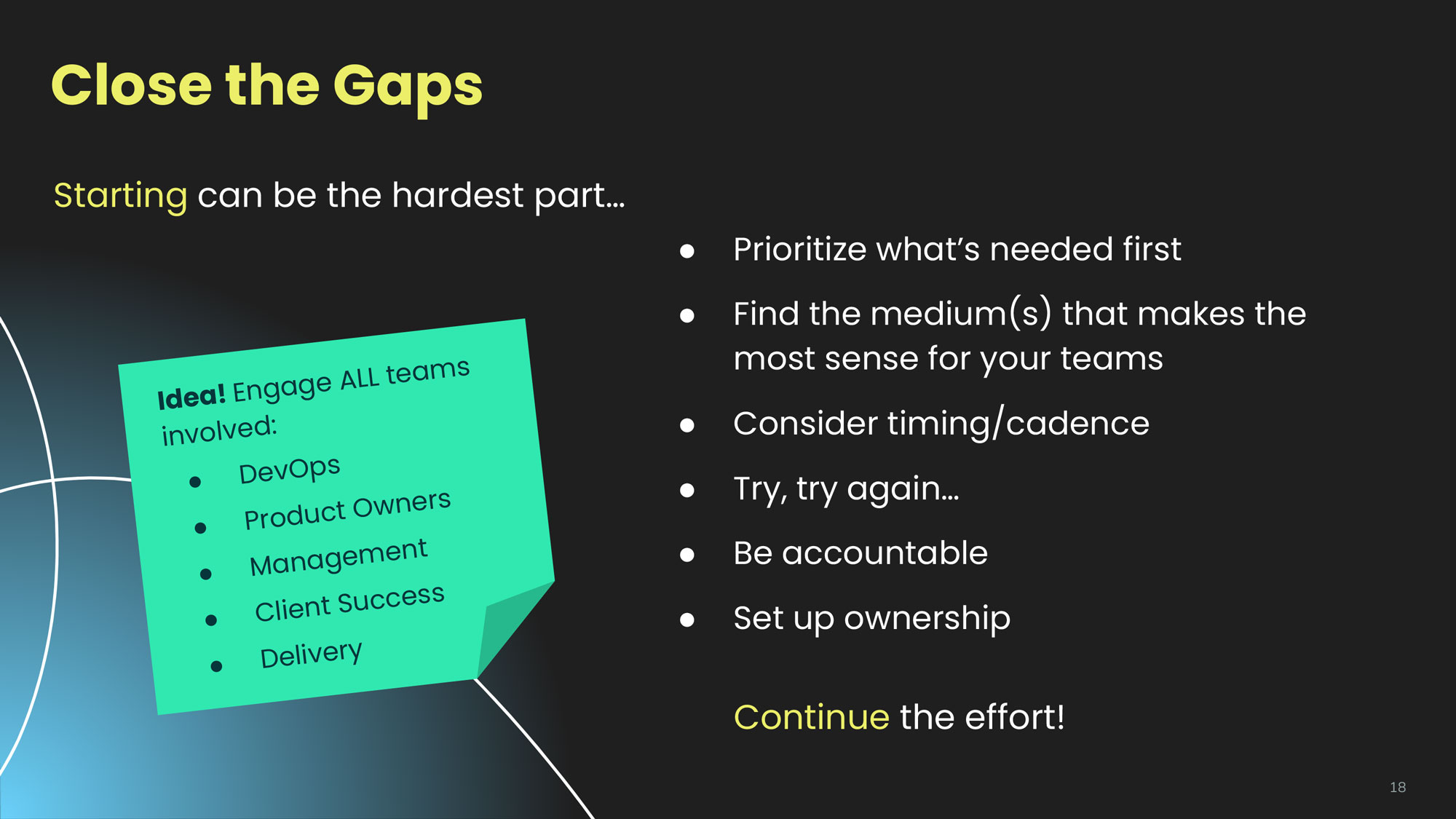
Starting can be the hardest part. By focusing on the gaps, you can provide information to the most amount of people first. Consider what mediums make the most sense, include those who could benefit, be accountable, and block time to continue working on this!
Rich Ecosystem
As you bring teams into the fold, you may find yourself with a rich variety of ways to share thoughts and ideas! As long as people are staying engaged, this is a badass outcome of shared collaboration.
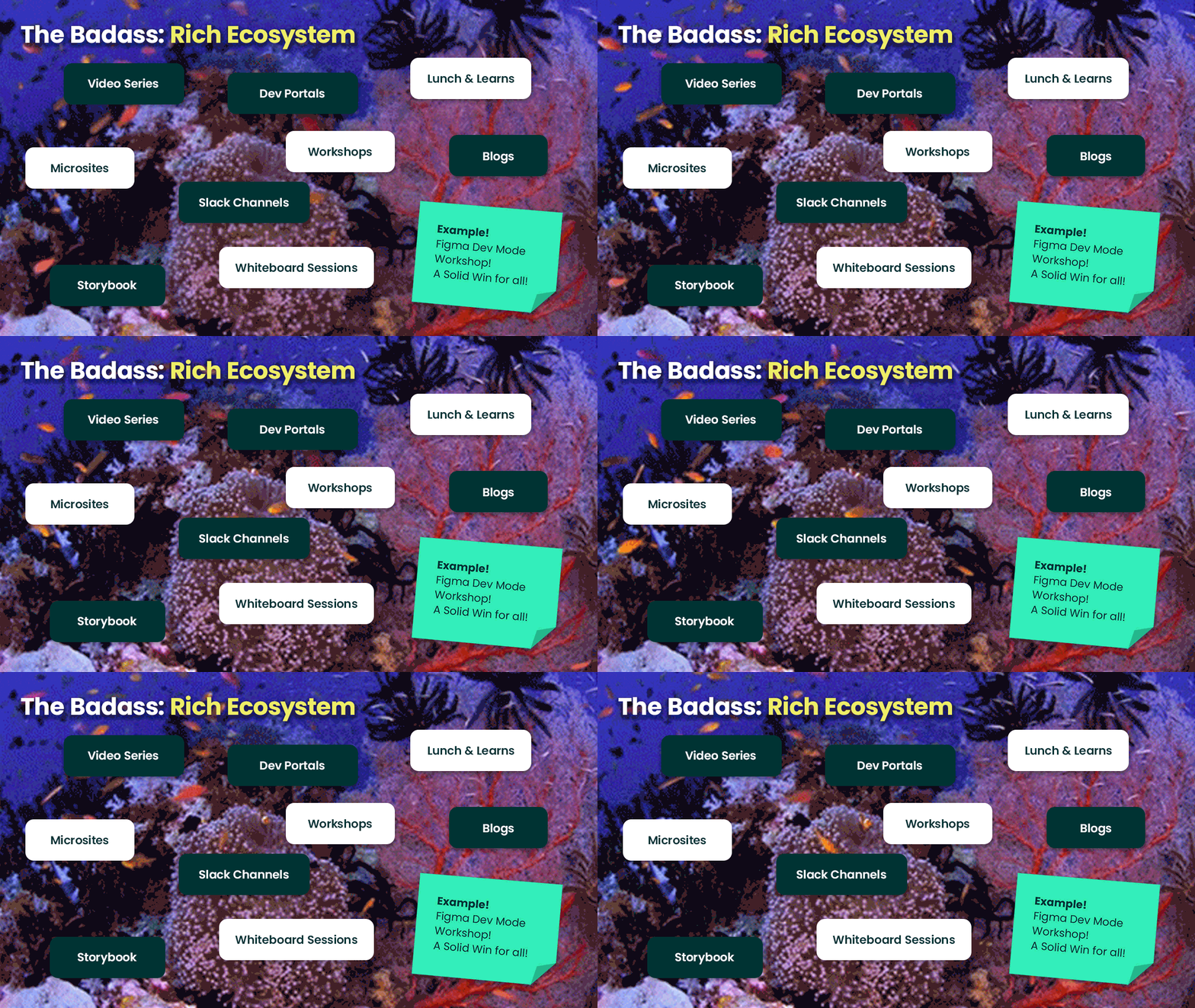
There is always room for opportunity. At the least, maybe there are ways to make information more accessible or easier to find.
The Keys Working Together
How do the keys work together? It’s up to you! You can think of these keys interacting many different ways. However you think of them, they are stronger as a group than they are individually.
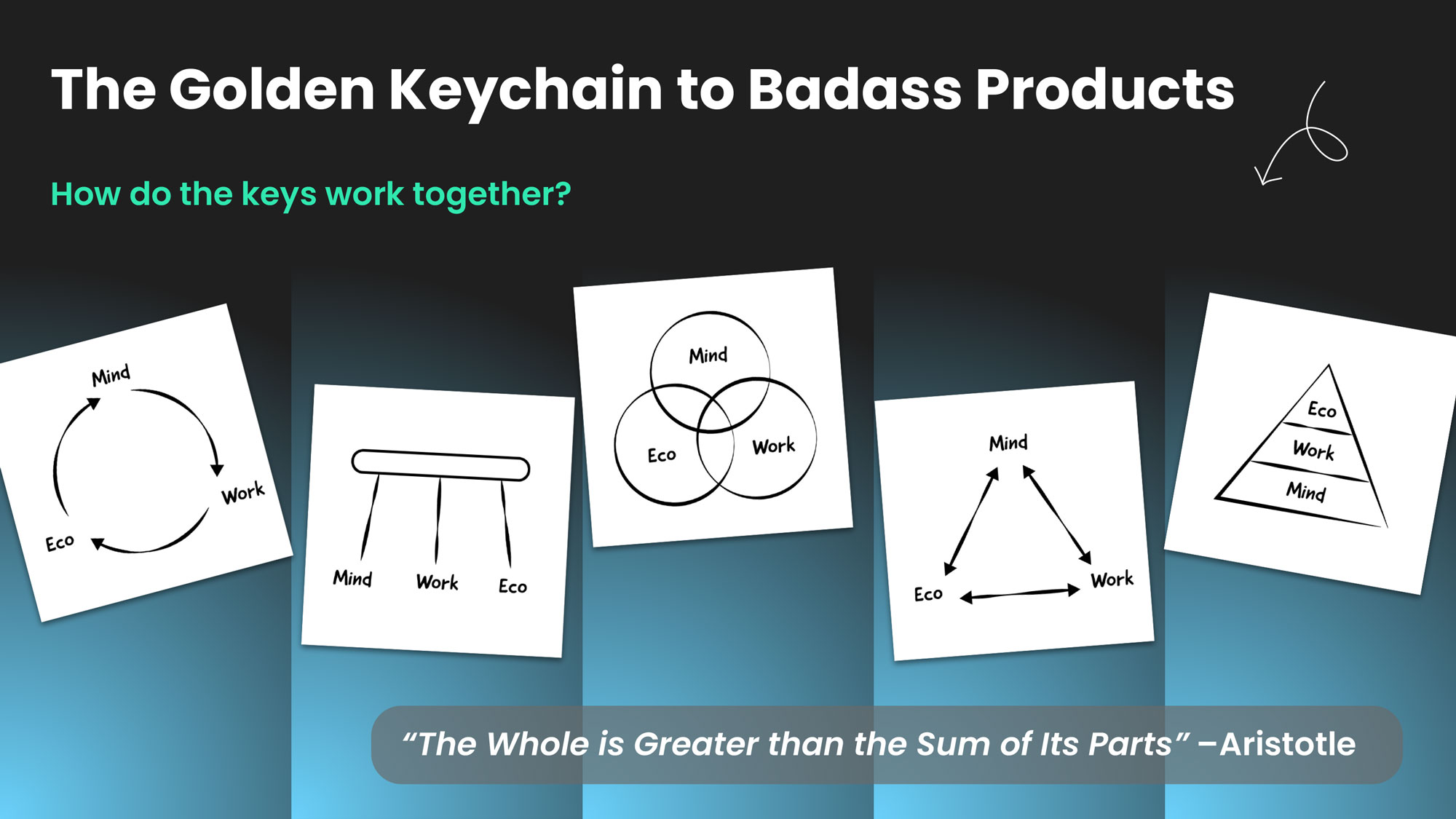
Maybe you think of them like I do: working together in chaotic harmony 😄

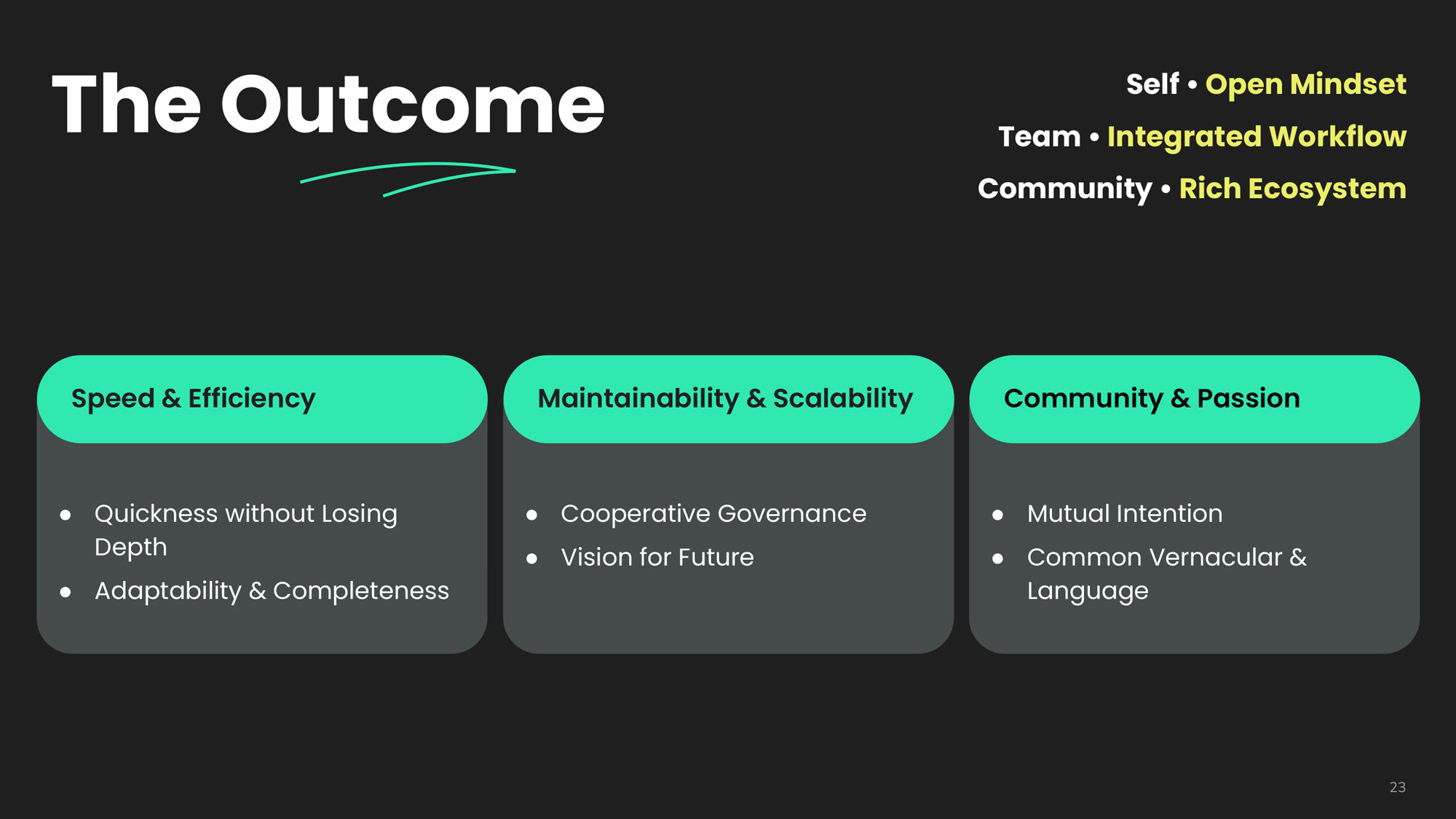
Unlocking the Outcome
The comprehensive outcome of fostering all three keys is not one-to-one. When used together, this golden keychain can empower teams to be more efficient, create a scalable vision for your product, and build stronger relationships.
Takeaway Website
As a takeaway after our talk, we offered a one-page website with a summary of our keys, each with its own matrix. These simple rating quadrants serve as a quick way for individuals and teams to gauge progress. Filling these out can be a fun and helpful exercise to track alignment over time.
Reflection
Open Source North (OSN) is an annual technology conference held at the University of St. Thomas each May. I learn something new every year and love being surrounded by people passionate about their craft. Because of that, presenting there was a special honor. As expected, our audience was welcoming and engaged throughout the presentation, which made for a very fun and relaxed atmosphere.